Lucas Oil Stadium is a retractable roof multi-purpose stadium located in downtown Indianapolis, Indiana. It opened on August 16, 2008, replacing the RCA Dome as the home field of the NFL's Indianapolis Colts. The stadium has a football capacity of approximately 63,000 seats but can be expanded to over 70,000 for major events like basketball and concerts. Notable for its distinctive brick and limestone exterior and innovative retractable roof, Lucas Oil Stadium has hosted a wide array of events including Super Bowl XLVI, the College Football Playoff National Championship, and multiple NCAA Final Fours.
Construction and Opening
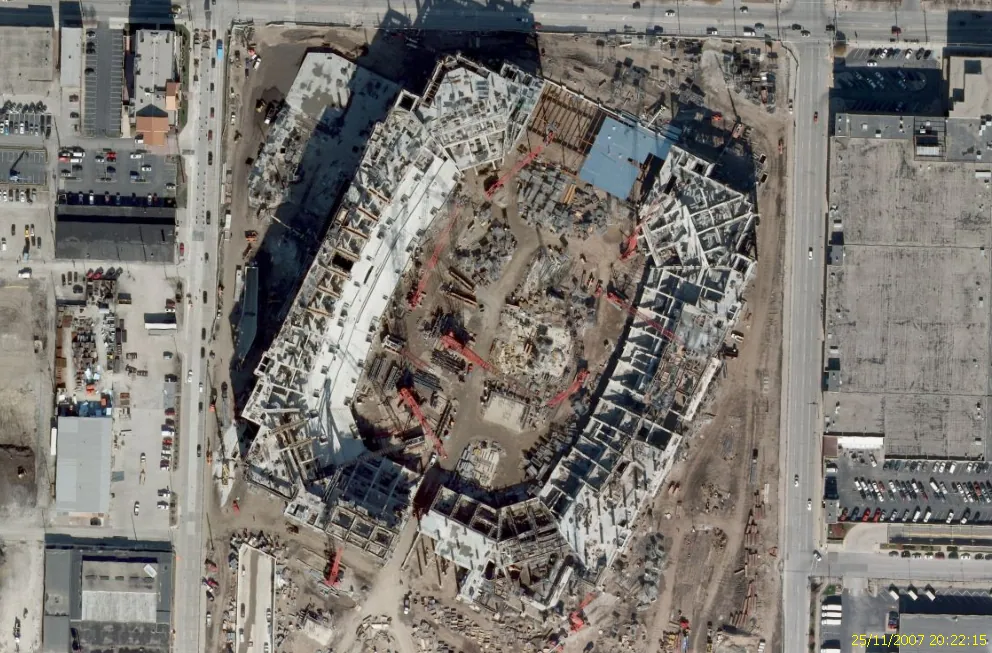
Groundbreaking for Lucas Oil Stadium occurred on September 20, 2005, with construction managed by the Hunt/Smoot/Mezzetta joint venture. The project took approximately four years to complete at a total cost of $720 million. Financing was a collaborative effort involving the State of Indiana, the City of Indianapolis, and the Indianapolis Colts organization, which contributed $100 million. Public funding mechanisms included increases in food and beverage taxes, auto rental taxes, and innkeeper's taxes within Marion County and several surrounding counties. The stadium was designed by the architectural firm HKS, with Walter P Moore serving as the lead structural engineer for the innovative roof system.
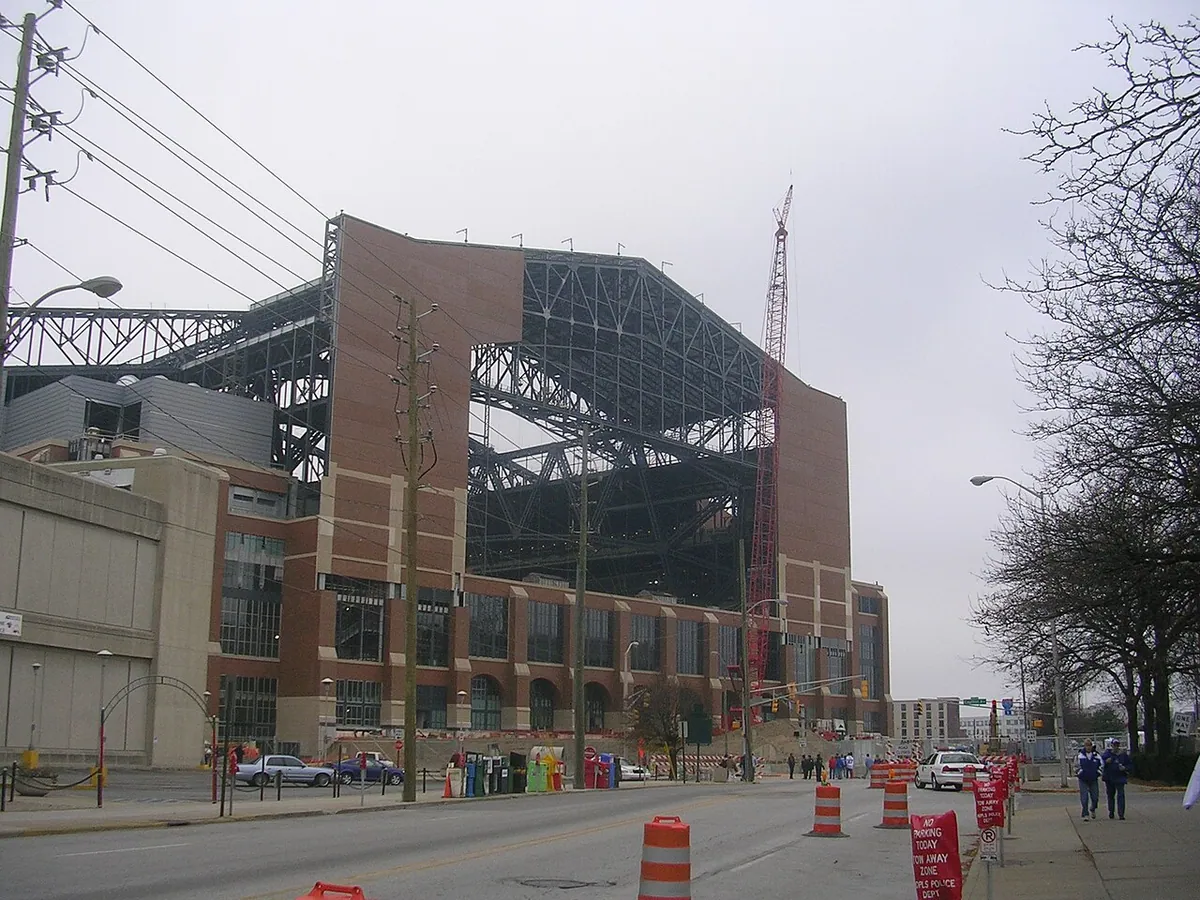
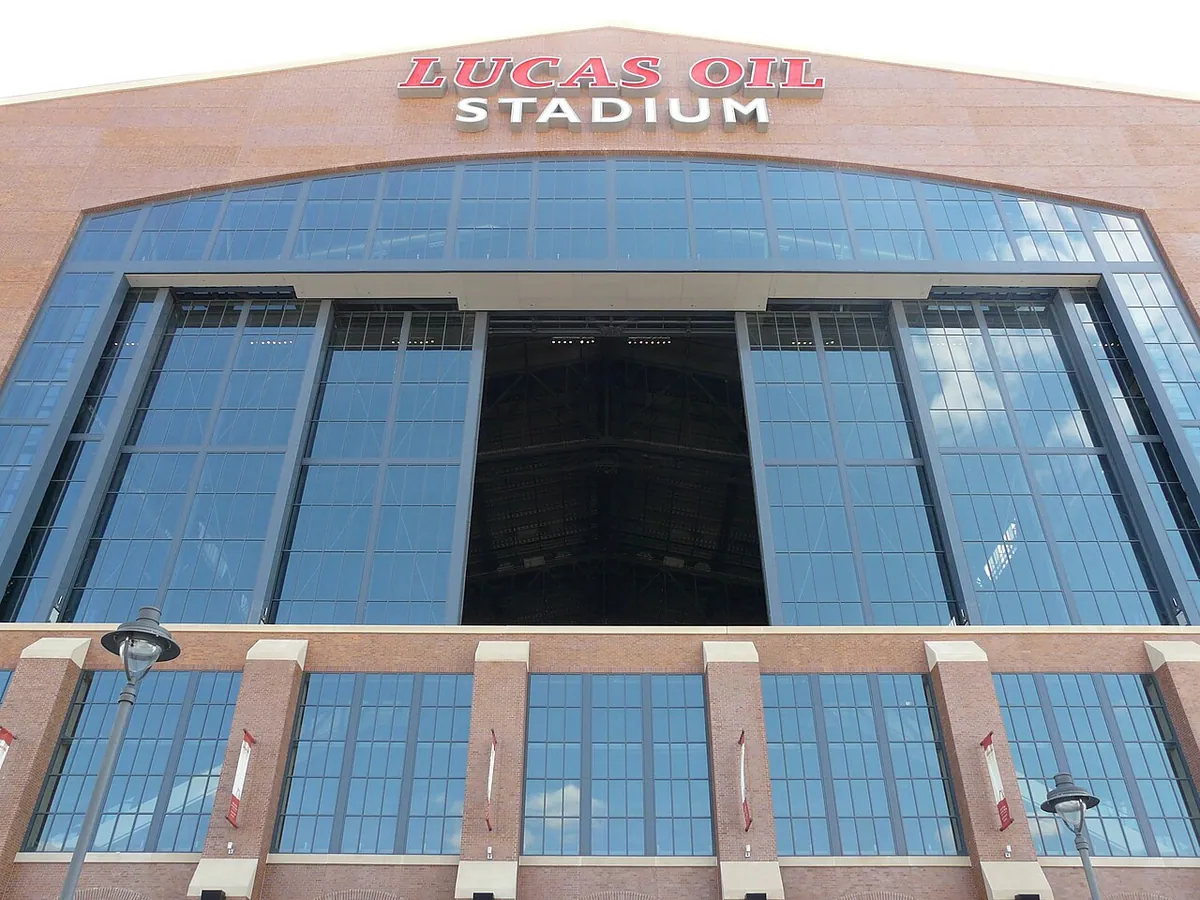
The construction process utilized a large fleet of cranes, with over 18,000 labor hours completed without a major safety incident. The stadium covers approximately 1.8 million square feet and was built to allow for the demolition of the adjacent RCA Dome and the subsequent expansion of the Indiana Convention Center. Its exterior is faced with reddish-brown brick trimmed with Indiana limestone, a design motif shared with several other sports venues in the Indianapolis area. The project faced budgetary challenges, with operating costs projected to be significantly higher than the old dome, leading to public debate and subsequent budget adjustments by the Capital Improvement Board.
Stadium Features and Capacity
Lucas Oil Stadium is a state-of-the-art facility designed for flexibility and fan experience. Its primary configuration for NFL football offers a seating capacity of 63,000. The seating bowl includes 7,100 club seats and executive suites. For major events like the NCAA Men's Basketball Final Four or large concerts, the stadium can be reconfigured and expanded to seat over 70,000 spectators. The venue also features two large club lounges, 12 meeting rooms, and direct underground connectivity to the Indiana Convention Center.
The stadium's technological features are centered on enhancing the viewing experience. It is equipped with two massive high-definition video boards, each measuring 53 feet tall, and a 360-degree ribbon board system that wraps nearly 1,700 feet around the interior. The four main entrance gates are corporately sponsored by Lucas Oil (north), Huntington Bank (west), Caesars Entertainment (south), and Verizon (east). A unique architectural feature is the retractable north window, which offers panoramic views of the Indianapolis skyline and is the first of its kind in an NFL stadium. The main concourses are wide, with standard seats offering approximately 20 inches of width and 33 inches of legroom.
Roof and Playing Surface
The retractable roof is the stadium's most distinctive engineering feature. Composed of two panels, each weighing 2.5 million pounds, the roof opens and closes along multiple parallel rails in approximately 11 minutes. It is designed as a rain-proof system, ensuring the field remains dry even when the roof is opened during inclement weather. The home team, the Indianapolis Colts, makes the decision on whether the roof is open or closed 90 minutes before kickoff. Lucas Oil Stadium is one of the NFL stadiums with a fully retractable roof and is unique for opening from sideline to sideline rather than endzone to endzone.
The playing surface has seen several changes since the stadium opened. From 2008 to 2018, the field was FieldTurf. It was replaced with Shaw Sports Momentum Pro synthetic turf from 2018 through 2024. In 2024, the stadium became the first indoor NFL venue to install Hellas Matrix Turf with a geofill system. The field dimensions and quality are maintained to host the highest levels of football, including NFL games and major college events. The combination of the retractable roof and advanced turf allows for optimal playing conditions regardless of Indiana's variable weather.
Football Tenants and NFL History
Lucas Oil Stadium has been the exclusive home of the Indianapolis Colts since the 2008 NFL season. The Colts' first preseason game there was a 20-7 loss to the Buffalo Bills on August 24, 2008. Their first regular season game was a 29-13 defeat to the Chicago Bears on September 7, 2008. The stadium has been the site of significant postseason moments, including the AFC Championship Game for the 2009 season, where the Colts defeated the New York Jets 30-17 on January 24, 2010.
The venue's most celebrated football event was Super Bowl XLVI, played on February 5, 2012, where the New York Giants defeated the New England Patriots 21-17. In terms of on-field excitement, the highest-scoring NFL game at the stadium from the 2008 to 2026 seasons was an AFC Wild Card playoff game on January 4, 2014, where the Colts defeated the Kansas City Chiefs 45-44 for a combined 89 points. The stadium has also hosted the NFL Scouting Combine annually, where college prospects are evaluated by all 32 teams. The Colts' tenure has cemented the stadium as a central pillar of the Indianapolis sports landscape.
College Football and Other Major Events
Beyond the NFL, Lucas Oil Stadium is a premier destination for college football. It has hosted the Big Ten Football Championship Game multiple times. On January 10, 2022, it was the site of the College Football Playoff National Championship. The stadium also annually hosts the IHSAA Indiana State Football Championships for high school teams. Another regular college event is the Circle City Classic, which features historically black colleges and universities. These events leverage the stadium's central location and modern amenities to draw fans from across the Midwest and nation.
The stadium's versatility is demonstrated by its wide-ranging event calendar. It is the home of the Drum Corps International World Championships, held there every year since 2009 (with exceptions in 2020 and 2021). It has hosted the NCAA Men's Basketball Final Four in 2010, 2015, 2021, and 2026, with another scheduled for 2029. Major concerts by artists like Taylor Swift, U2, Kenny Chesney, and Morgan Wallen are frequent occurrences. In 2024, it hosted the U.S. Olympic Swimming Trials, setting a record for the largest indoor swim meet with 20,689 spectators. Future booked events include the Monster Jam World Finals in 2027 and WWE's Royal Rumble in 2025.
- Super Bowl XLVI (2012)
- Drum Corps International World Championships (held there most years since 2009)
- U.S. Olympic Swimming Trials (2024, with a return announced for 2028)
- WWE Royal Rumble (2025)
Naming Rights and Financials
The naming rights for the stadium were secured by Lucas Oil, a manufacturer of automotive lubricants based in Indianapolis, in 2006 prior to construction. The agreement is valued at $122 million over a 20-year term. This partnership provided a significant source of funding for the $720 million project and aligned a local corporation with a major civic landmark. The financial structure of the stadium involved multiple stakeholders. The Indianapolis Colts contributed $100 million upfront. The remainder was financed through public funds raised by the State of Indiana and the City of Indianapolis, primarily via tax increases in Marion County and several surrounding 'doughnut' counties.
Operating the stadium has presented financial challenges for the Capital Improvement Board (CIB), the public entity that manages the venue. Initial projections showed annual operating expenses would be $10 million higher than the old RCA Dome. By 2009, the CIB anticipated a $20 million operating deficit for the stadium. This led to public criticism of the Colts' favorable lease terms and calls for the team to assist with the shortfall. The CIB responded by trimming staff and cutting its budget, while the Indiana General Assembly authorized targeted local tax increases to help cover the gap, ensuring the stadium's long-term viability.
Renovations and Records
While no major structural renovations have been required, the stadium has undergone periodic updates to maintain its status as a premier venue. The most significant change has been to the playing surface, which was replaced in 2018 and again in 2024. The 2024 installation of Hellas Matrix Turf with geofill represented a technological advancement, making it the first indoor NFL field to use such a system. The stadium's infrastructure, including its video boards and sound systems, is also regularly refreshed to keep pace with technology. The retractable roof mechanism has required maintenance, notably after an incident in 2015 when a bolt fell during a preseason game, leading to a temporary closure of the roof for inspection. Lucas Oil Stadium holds several attendance and event records. For football, its expandable configuration allows it to host over 70,000 fans for select events. In terms of NFL gameplay from the 2008 to 2026 seasons, the record for highest combined score in a game is 89 points, set in the 2014 playoff game between the Colts and Chiefs.
Recent games
| Date | Game | Week |
|---|---|---|
| Jan 10, 2027 | Jacksonville Jaguars at Indianapolis Colts | Week 18 |
| Dec 27, 2026 | Cincinnati Bengals at Indianapolis Colts | Week 16 |
| Nov 29, 2026 | New York Giants at Indianapolis Colts | Week 12 |
| Nov 15, 2026 | Miami Dolphins 22 at Indianapolis Colts 24 | Week 10 |
| Nov 8, 2026 | Dallas Cowboys 27 at Indianapolis Colts 23 | Week 9 |
| Oct 18, 2026 | Tennessee Titans 26 at Indianapolis Colts 20 | Week 6 |
| Sep 27, 2026 | Houston Texans 17 at Indianapolis Colts 19 | Week 3 |
| Sep 13, 2026 | Baltimore Ravens 41 at Indianapolis Colts 23 | Week 1 |
| Dec 28, 2025 | Jacksonville Jaguars 23 at Indianapolis Colts 17 | Week 17 |
| Dec 22, 2025 | San Francisco 49ers 48 at Indianapolis Colts 27 | Week 16 |
| Nov 30, 2025 | Houston Texans 20 at Indianapolis Colts 16 | Week 13 |
| Nov 9, 2025 | Atlanta Falcons 25 at Indianapolis Colts 31 | Week 10 |
Video
FAQ
What is the capacity of Lucas Oil Stadium?
Lucas Oil Stadium has a seating capacity of 63,000 for NFL football games. The stadium is designed to be flexible and can be reconfigured and expanded to seat over 70,000 spectators for major events like the NCAA Men's Basketball Final Four, large concerts, and other special events. The venue includes 7,100 club seats and 139 executive suites within its 1.8 million square foot footprint. This expandable capacity allows it to host major events.
When did Lucas Oil Stadium open?
Lucas Oil Stadium officially opened to the public on August 16, 2008. Groundbreaking for the project had taken place nearly three years earlier on September 20, 2005. The first public events were Indiana high school football games on August 22, 2008, as part of the PeyBack Classic. The Indianapolis Colts played their first preseason game in the new stadium on August 24, 2008, and their first regular season game on September 7, 2008.
Can Lucas Oil Stadium open its roof?
Yes, Lucas Oil Stadium features a fully retractable roof. The roof is composed of two massive panels that open and close from sideline to sideline in approximately 9 to 11 minutes. It is engineered to be rain-proof, keeping the field dry even when open during wet weather. The decision to open or close the roof is made by the home team, the Indianapolis Colts, 90 minutes before kickoff for NFL games. It is one of only three NFL stadiums with a retractable roof.
What Super Bowl was played at Lucas Oil Stadium?
Lucas Oil Stadium hosted Super Bowl XLVI on February 5, 2012. In that game, the New York Giants defeated the New England Patriots by a score of 21-17. The stadium's modern amenities, retractable roof, and connection to the Indiana Convention Center made it an ideal host for the NFL's championship event. The successful hosting of the Super Bowl demonstrated the stadium's capability to manage an event of that magnitude.
How much did Lucas Oil Stadium cost?
The total construction cost for Lucas Oil Stadium was $720 million. Financing was a public-private partnership. The Indianapolis Colts organization contributed $100 million toward the project. These included increases in food and beverage taxes, auto rental taxes, and innkeeper's taxes in Marion County and several surrounding counties. In 2006, Lucas Oil also secured the naming rights with a 20-year, $122 million agreement.
What is the address of Lucas Oil Stadium?
Lucas Oil Stadium is located at 500 South Capitol Avenue in Indianapolis, Indiana. The stadium is on the south side of South Street, a block south of the former site of the RCA Dome. It was constructed to allow the removal of the RCA Dome and the expansion of the Indiana Convention Center on that site. The exterior features reddish-brown brick trimmed with Indiana limestone, similar to other local venues like Gainbridge Fieldhouse.
Sources
- Lucas Oil Stadium (Wikipedia) Wikipedia
- Lucas Oil Stadium, Home of the Indianapolis Colts lucasoilstadium.com
- Lucas Oil Stadium walterpmoore.com
- Lucas Oil Stadium maximcrane.com
- Lucas Oil Stadium Tours colts.com
- nflverse game, roster and draft data nflverse (CC BY 4.0)