The Texas A&M Aggies football program represents Texas A&M University in NCAA Division I FBS competition. Founded in 1894, the Aggies are members of the Southeastern Conference (SEC), having joined in 2012 after a long history in the Southwest Conference and Big 12. The program claims three national championships and 18 conference titles, and plays its home games at Kyle Field in College Station. Notable achievements include two Heisman Trophy winners and a tradition highlighted by the 12th Man. The team's all-time record stands at 801-516-48, and the current head coach is Mike Elko, who is in his third season with a 23-14 record.
Program Founding and Early History
Texas A&M first fielded a football team in 1894 under head coach F. Dudley Perkins, compiling a 1-1 record. The early decades saw a series of coaches building the program's foundation. From 1909 to 1914, Charley Moran led the Aggies to a 38-8-4 record, including an undefeated 1909 season. The program joined the Southwest Conference under coach Edwin Harlan. The most significant early success came under Dana X. Bible, who coached from 1919 to 1928. His 1919 team went undefeated and untied, outscoring opponents 275-0. It was during Bible's tenure, at the 1922 Dixie Classic, that the 12th Man tradition began when reserve E. King Gill suited up to be ready if needed. Following Bible's departure, Homer Norton took over in 1934 and led the program to its most recognized national title. The 1939 Aggies finished 11-0, capped by a Sugar Bowl victory over Tulane. Norton compiled an 82-53-9 record at Texas A&M. The post-World War II era was challenging, highlighted by the brief tenure of Harry Stiteler from 1948 to 1950, which ended in a personal scandal and resignation after a 8-21-2 record. The program then entered a new period with the hiring of Paul "Bear" Bryant in 1954.
The Bear Bryant Era and Post-War Challenges
Bear Bryant arrived in College Station in 1954, immediately establishing a tough culture through a grueling training camp in Junction, Texas. His first season resulted in a 1-9 record, but the "Junction Boys" who survived formed the core of a resurgence. By 1956, Bryant led the Aggies to a Southwest Conference championship. The following year, running back John David Crow won the program's first Heisman Trophy, and the team was in national title contention late in the season. Bryant compiled a 25-14-2 record over four seasons before leaving for Alabama after the 1957 season. His departure ushered in a period of struggle. The Aggies failed to win more than four games in a single season under Myers.
Coaching Eras from Stallings to Slocum
Gene Stallings, a former Junction Boy, returned as head coach in 1965. His tenure was marked by difficulty, with a 27-45-1 overall record. However, the 1967 season was a landmark success. After an 0-4 start, the Aggies rallied to win the Southwest Conference and then defeated Bear Bryant's Alabama team in the Cotton Bowl. Stallings was fired after the 1971 season. Emory Bellard took over in 1972, introducing the wishbone offense. He resigned midway through the 1978 season. Tom Wilson served as head coach from 1978 to 1981, compiling a 21-19 record and an Independence Bowl victory in his final season. Jackie Sherrill's hiring in 1982 brought renewed success. Over seven seasons, Sherrill went 52-28-1, winning three consecutive Southwest Conference championships from 1985 to 1987 and securing Cotton Bowl victories after the 1985 and 1987 seasons. He resigned in 1988 following NCAA probation for the program. R.C. Slocum, promoted from defensive coordinator, became the winningest coach in school history from 1989 to 2002. Slocum never had a losing season, compiling a 123-47-2 record, winning four conference championships, and making Kyle Field a formidable home venue where the Aggies lost only 12 times in 14 years. He was asked to resign after the 2002 season.
Conference Membership and Championships
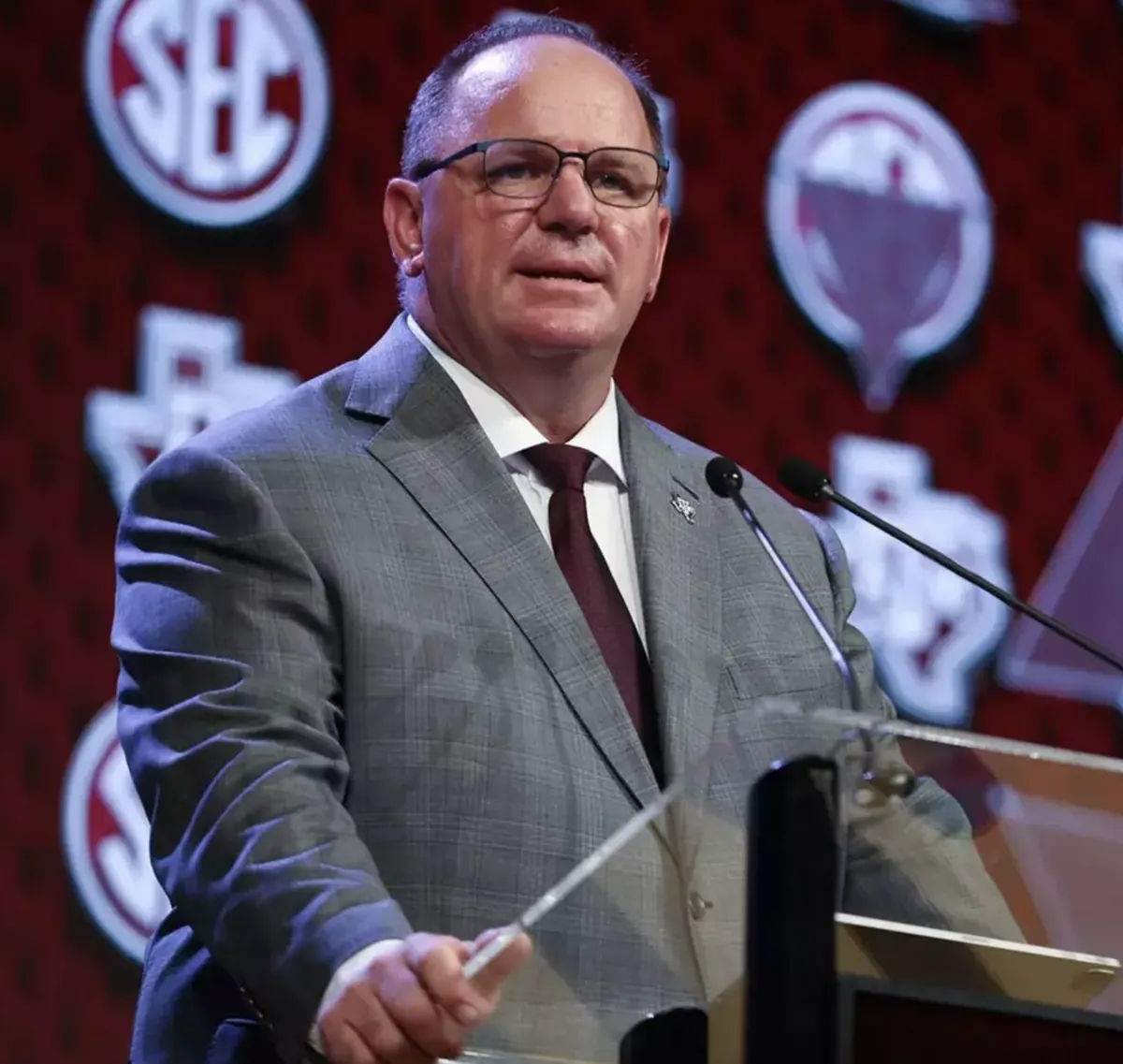
Texas A&M's conference history is a central part of its identity. The Aggies competed in the Southwest Conference (SWC) from its early years until the conference dissolved after the 1995 season. During that time, they won 17 SWC championships. With the formation of the Big 12 Conference in 1996, Texas A&M became a member of the Big 12 South Division. The program's championship claims include the 1998 overall Big 12 title, the 1997 Big 12 South Division title, and a share of the 2010 Big 12 South Division title. In 2012, Texas A&M moved to the Southeastern Conference (SEC), a major realignment that severed annual contests with several longtime rivals. The program has not yet won an SEC championship or appeared in the SEC Championship Game. The program officially recognizes three national championships from 1919, 1927, and 1939. The 1939 title is universally recognized as the Aggies finished 11-0 and were voted number one in the final AP Poll. The 1919 and 1927 championships are retroactive selections awarded by certain historical selectors. The program's claimed national and conference championships include the following key years.
- National Championships: 1919, 1927, 1939.
- Southwest Conference Championships: 17 titles.
- Big 12 Championships: 1998 overall title, 1997 South Division, 2010 South Division (co-champion).
Head Coaches and Their Records
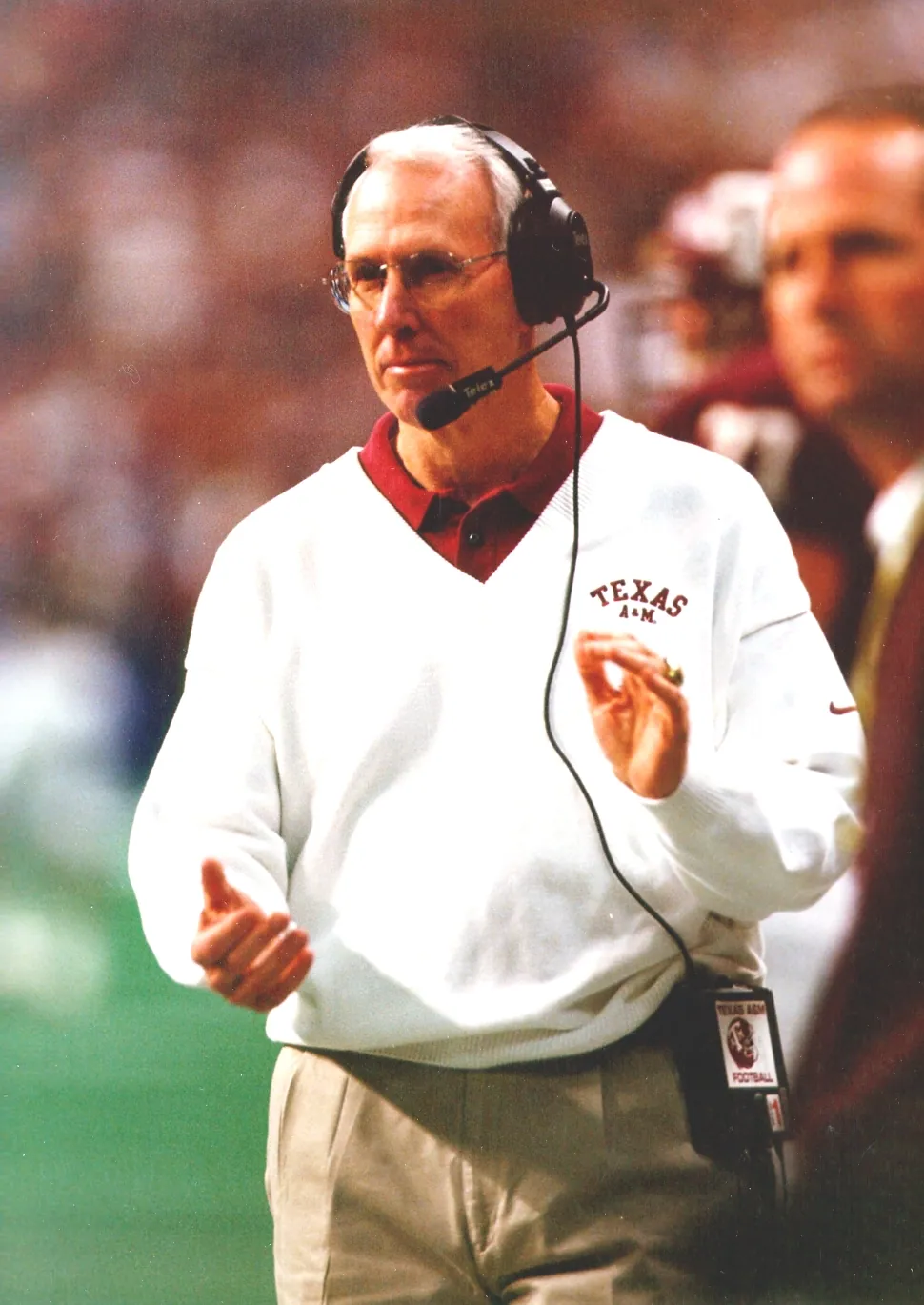
The period between Slocum and Elko included the tenures of Dennis Franchione and Kevin Sumlin. Franchione's era was marred by a secret newsletter scandal and a 77-0 loss to Oklahoma. Kevin Sumlin, who coached the early years in the SEC, started strong with an 11-2 record and a Cotton Bowl win in 2012 behind Heisman winner Johnny Manziel. Jimbo Fisher coached from 2018 to 2023 before Mike Elko returned to the program as head coach in 2024. The Aggies have had 33 Consensus All-Americans in program history.
| Coach | Years | Record |
|---|---|---|
| Homer Norton | 1934 to 1947 | 82-53-9 |
| Bear Bryant | 1954 to 1957 | 25-14-2 |
| Gene Stallings | 1965 to 1971 | 27-45-1 |
| Emory Bellard | 1972 to 1978 | 48-27 |
| Tom Wilson | 1978 to 1981 | 21-19 |
| Jackie Sherrill | 1982 to 1988 | 52-28-1 |
| R.C. Slocum | 1989 to 2002 | 123-47-2 |
| Mike Elko | 2024 to present | 23-14 |
Kyle Field and the 12th Man Tradition
The Aggies play all home games at Kyle Field, an outdoor stadium on the university campus in College Station. The stadium has undergone numerous expansions and renovations, with its current capacity listed at 102,733, making it one of the largest stadiums in college football. The venue is known for its loud and passionate atmosphere, a key part of the home-field advantage cultivated during the R.C. Slocum era. The stadium's facade displays the program's claimed national and conference championships. The identity of Kyle Field is inseparable from the 12th Man tradition, which originated in 1922. The tradition symbolizes the readiness of the entire student body to support the team, exemplified by the practice of students standing throughout games. A walk-on player traditionally wears the number 12 jersey each season to honor this legacy. Approximately 34,000 Aggie students stand during every game at Kyle Field, ready to do what they can to help their team.
Heisman Winners and Notable NFL Players
Texas A&M has produced two Heisman Trophy winners. John David Crow won the award in 1957 under coach Bear Bryant, rushing for 562 yards and six touchdowns while also playing defense. The program has been a consistent pipeline to the NFL. Since 1974, 311 Texas A&M players have appeared on NFL rosters, with 204 being drafted, including 31 first-round selections. Notable first-round picks since 2013 include Luke Joeckel, Jake Matthews, Mike Evans, Johnny Manziel, and Myles Garrett, who was the number one overall pick in 2017. Kyler Murray was also a number one overall pick in 2019. As of the 2026 NFL season, 49 Aggies were on active rosters, including veterans like Von Miller, Mike Evans, Myles Garrett, and Kyler Murray, alongside recent standouts like De'Von Achane and Edgerrin Cooper. The 2026 NFL Draft saw 12 Aggies selected, highlighting the program's recent talent production. Key facts about Texas A&M's NFL draft history since 1974 include.
- Total players on NFL rosters: 311.
- Players drafted: 204.
- First-round draft picks: 31.
- Number one overall picks: 2 (Myles Garrett in 2017, Kyler Murray in 2019).
- Players drafted in the 2026 NFL Draft: 12.
- Aggies on 2026 NFL rosters: 49 players.
Rivalries and Recent Seasons
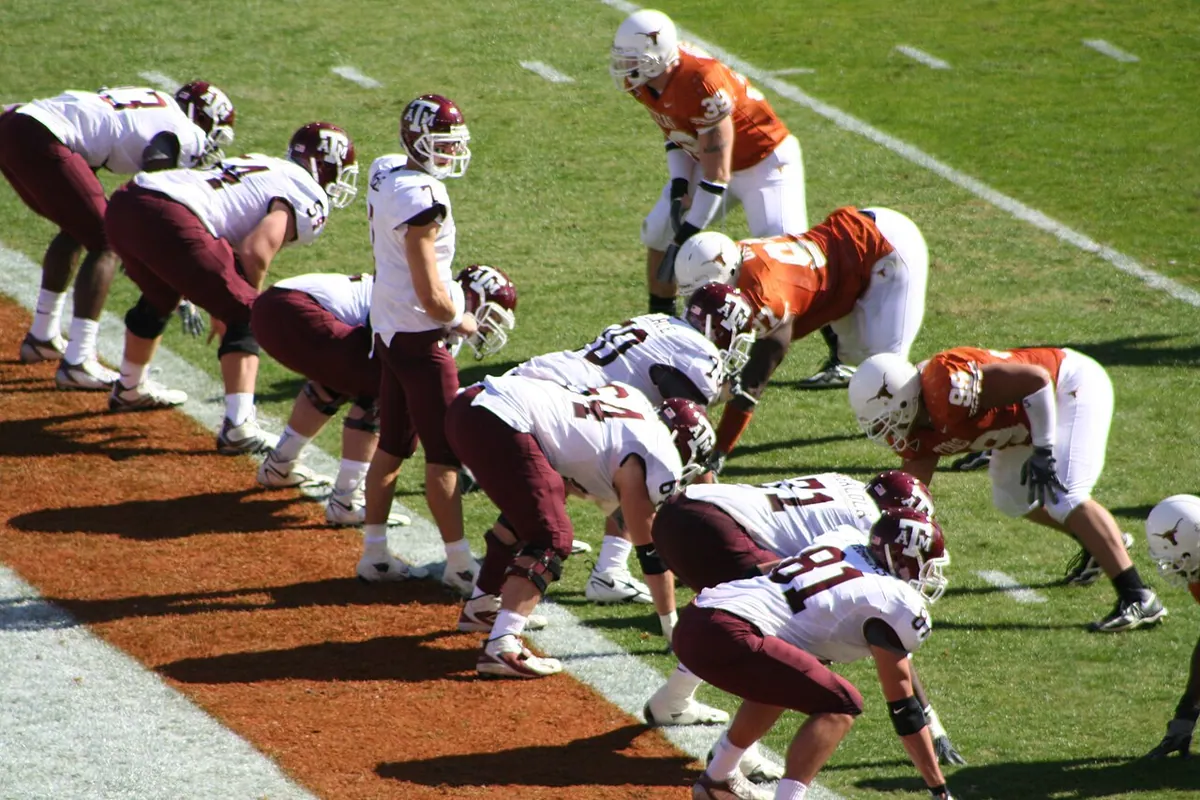
Texas A&M maintains several historic rivalries, the most prominent being with the University of Texas. The Lone Star Showdown was played annually from 1915 until Texas A&M's departure for the SEC in 2011, with Texas leading the all-time series. Other key rivalries include LSU (the rivalry for the "Golden Boot"), Arkansas (a Southwest Conference and now SEC rivalry), and Baylor. The program's recent history has been marked by high expectations but inconsistent results in the SEC. The 2026 season, under third-year head coach Mike Elko, has been a struggle, with the team posting a 4-7 overall record and a 1-7 mark in SEC play. This follows Elko's first two seasons where he compiled a 23-14 record. The program continues to seek its first SEC championship and a return to the elite tier of college football. Primary football rivals for Texas A&M include.
- Texas (Lone Star Showdown)
- LSU
- Arkansas
- Baylor
- Texas Tech
- TCU
- Missouri
- South Carolina
NFL players from Texas A&M
| Player | Pos | Years | Main team |
|---|---|---|---|
| Shane Lechler | P | 2000–2018 | Las Vegas Raiders |
| Myles Garrett | LB | 2017– | Cleveland Browns |
| Von Miller | OLB | 2011– | Denver Broncos |
| Richmond Webb | OT | 1990–2002 | Miami Dolphins |
| Mike Evans | WR | 2014– | Tampa Bay Buccaneers |
| Ray Childress | DE | 1985–1996 | Tennessee Titans |
| Aaron Glenn | DB | 1994–2008 | New York Jets |
| Sam Adams | DT | 1994–2007 | Seattle Seahawks |
| Dante Hall | WR | 2000–2008 | Kansas City Chiefs |
| Jacob Green | DE | 1980–1992 | Seattle Seahawks |
| Jake Matthews | OT | 2014– | Atlanta Falcons |
| Don Muhlbach | LS | 2004–2020 | Detroit Lions |
| William Thomas | OLB | 1991–2001 | Philadelphia Eagles |
| Jerry Fontenot | C | 1989–2004 | Chicago Bears |
| Erik McCoy | C | 2019– | New Orleans Saints |
Video
FAQ
What conference is Texas A&M football in?
Texas A&M football competes in the Southeastern Conference (SEC). The Aggies joined the SEC in 2012 after spending their entire history prior in the Southwest Conference (1915 to 1995) and the Big 12 Conference (1996 to 2011). The move to the SEC was a major realignment in college athletics, placing Texas A&M in one of the nation's most competitive football leagues. This conference affiliation shapes the team's schedule, recruiting, and competitive goals each season. The Aggies have yet to win an SEC championship since joining the league.
Who is the current Texas A&M football coach?
The current head coach of Texas A&M football is Mike Elko. As of the 2026 season, Elko is in his third year leading the program and holds a record of 23-14. He returned to Texas A&M after previously serving on the coaching staff. Elko succeeded Fisher, who coached the Aggies from 2018 through the 2023 season. The coaching change was part of the program's effort to achieve greater success within the SEC. Elko's current team struggled in the 2026 season, posting a 4-7 record.
What is the capacity of Texas A&M's football stadium?
Texas A&M plays its home games at Kyle Field, which has a seating capacity of 102,733. The stadium, located on campus in College Station, is one of the largest in college football. It has undergone significant expansions and renovations over the decades to reach its current size and modern amenities. Kyle Field serves as the home of the 12th Man and is known for its intense game-day atmosphere during Aggie home contests. The stadium's large capacity contributes to a formidable home-field advantage for the team.
How many national championships does Texas A&M have?
Texas A&M officially claims three national championships in football, from the 1919, 1927, and 1939 seasons. The 1939 title is universally recognized as the Aggies finished 11-0 and were voted number one in the final AP Poll. The 1919 and 1927 championships are retroactive selections awarded by certain historical selectors, such as the Billingsley Report and the National Championship Foundation. These claimed titles are displayed on the Kyle Field stadium facade. The program's last consensus national championship was won in 1939.
Who are the Heisman Trophy winners from Texas A&M?
Texas A&M has two Heisman Trophy winners. John David Crow won the award in 1957 as a running back under coach Bear Bryant. Johnny Manziel won the Heisman in 2012 as a freshman quarterback. Manziel's dynamic play led the Aggies to a successful season in the program's first year in the SEC. Both players are central figures in the program's history.
What is Texas A&M's all-time record against Texas?
The football rivalry between Texas A&M and the University of Texas is one of the most played in college sports. The series was played annually from 1915 until 2011 when Texas A&M left the Big 12 for the SEC. Texas leads the all-time series. The cessation of the annual game was a direct consequence of conference realignment. The rivalry includes other in-state opponents like Baylor and Texas Tech within the context of the old Southwest Conference.
Sources
- Texas A&M Aggies football (Wikipedia) Wikipedia
- History 101: Texas A&M Football studentunionsports.com
- Why does Texas A&M blatantly lie on Kyle Field about winning false national titles? Yahoo Sports
- 125 Years of Texas A&M Football 12thmanfoundation.com
- nflverse game, roster and draft data nflverse (CC BY 4.0)